
A stamping tool (press tool) is a specially designed die set used to cut, form, or shape sheet metal into precise components using a press machine.
In the motor industry, stamping tools play a vital role in manufacturing high-precision rotor and stator laminations through the lamination punching process.
The tool operates by placing sheet metal between two main components the punch and die which work together to cut or form the required shape.
When the press machine operates, the punch moves downward from the top section (ram) and pushes the sheet metal into the die cavity to produce the desired part.
Main Components of a Stamping Tool
-
Punch – The moving component responsible for cutting or forming the sheet metal into the required shape.
-
Die – The fixed lower component that supports the metal and provides the exact cavity shape for production.
-
Stripper Plate – Helps remove the metal part from the punch after each stroke.
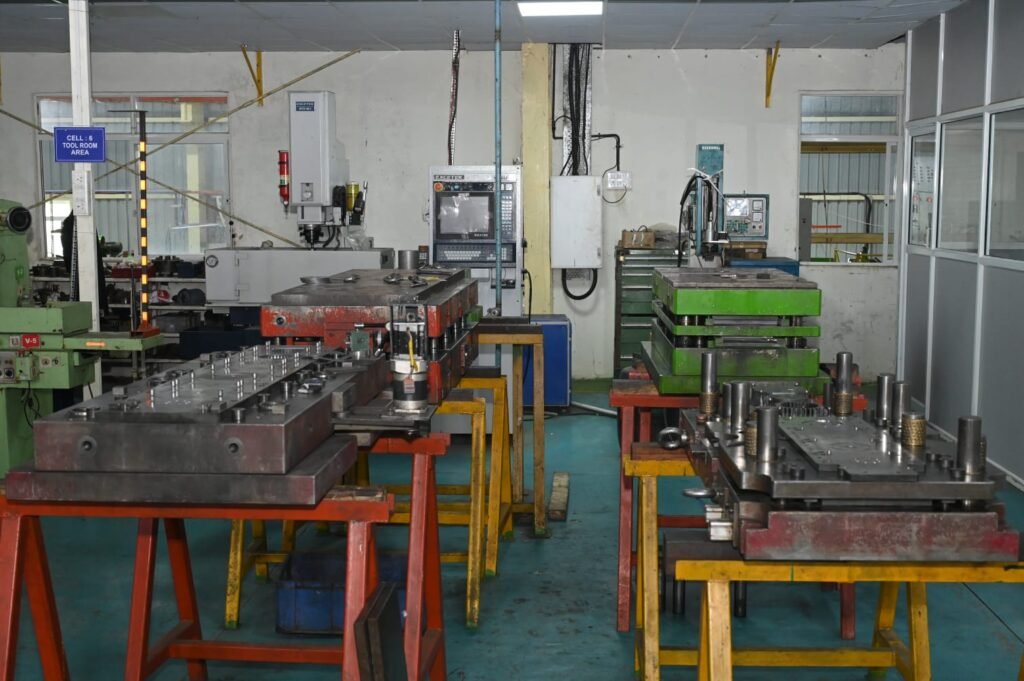
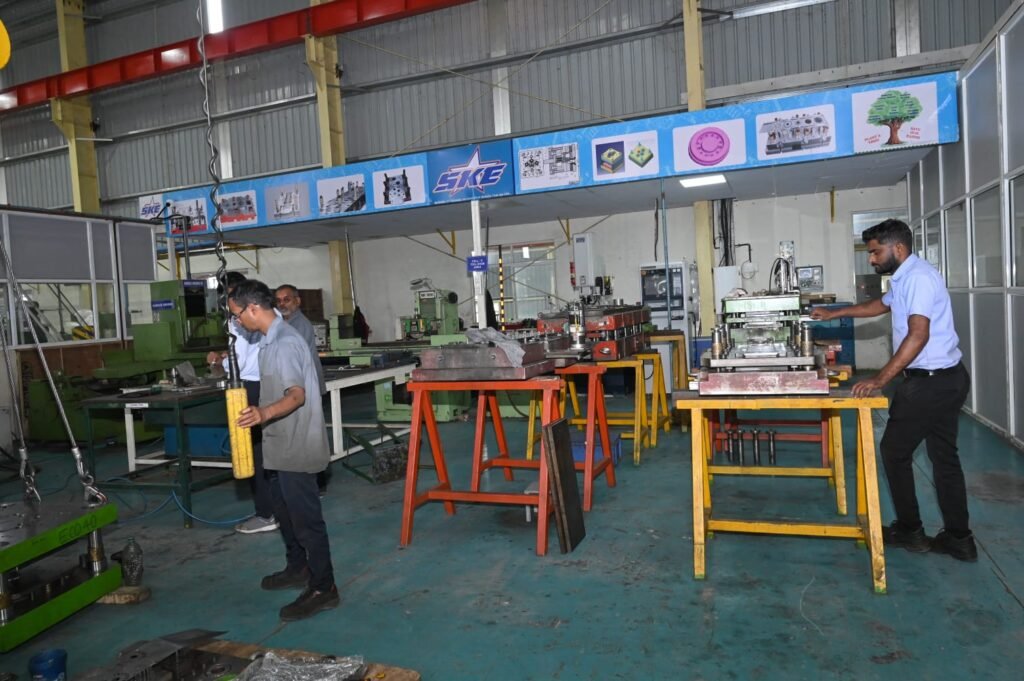
Compond Dies
Compound dies are specialized tooling systems used in high-precision stamping operations, allowing multiple actions—such as punching, blanking, and forming—to occur in a single press stroke. In the context of motor lamination manufacturing, compound dies are essential for producing intricate and consistent shapes with tight tolerances, particularly for stator and rotor assemblies.
A stator die is a type of compound die designed specifically for stamping stator laminations the stationary part of an electric motor. This die precisely punches the outer profile, inner bore, and slot shapes of the stator from electrical steel sheets. Key features of stator dies include:
High concentricity and dimensional control to ensure proper fit and magnetic performance.
Can include interlocking or notching features for stacking laminations.
Often designed for progressive or compound action to complete blanking and slot punching in one pass.
A rotor die is used for stamping rotor laminations, the rotating component of electric motors. Like stator dies, rotor dies are crafted to maintain high accuracy and consistency across large production runs. They may feature:
Compound action to punch the rotor’s outer profile, slots, and center hole in a single stroke.
Customization for various rotor bar shapes and slot geometries depending on motor design.
Precision alignment to ensure balanced rotation and efficient performance.
A notching die is used for selectively cutting slots or notches into the inner or outer periphery of stator or rotor laminations—typically one slot at a time. This method is ideal for lower volume production or prototyping. Key points include:
Often used in tool room or low-volume environments.
Allows flexibility in slot shape and position.
Can be manual or semi-automatic depending on production scale.
While notching is slower than compound die stamping, it provides a cost-effective solution for customized or developmental motor designs.
At Shree Kedareshwar Engineering, we specialize in designing and manufacturing high-precision customized dies tailored to meet the specific production needs of our clients. With strong expertise in tooling and sheet metal processing, we develop durable and efficient dies that improve productivity, accuracy, and consistency in every manufacturing cycle.
We understand that every industry has unique requirements. That’s why we provide die solutions that are engineered according to your exact component design, material specification, production volume, and operational requirements.